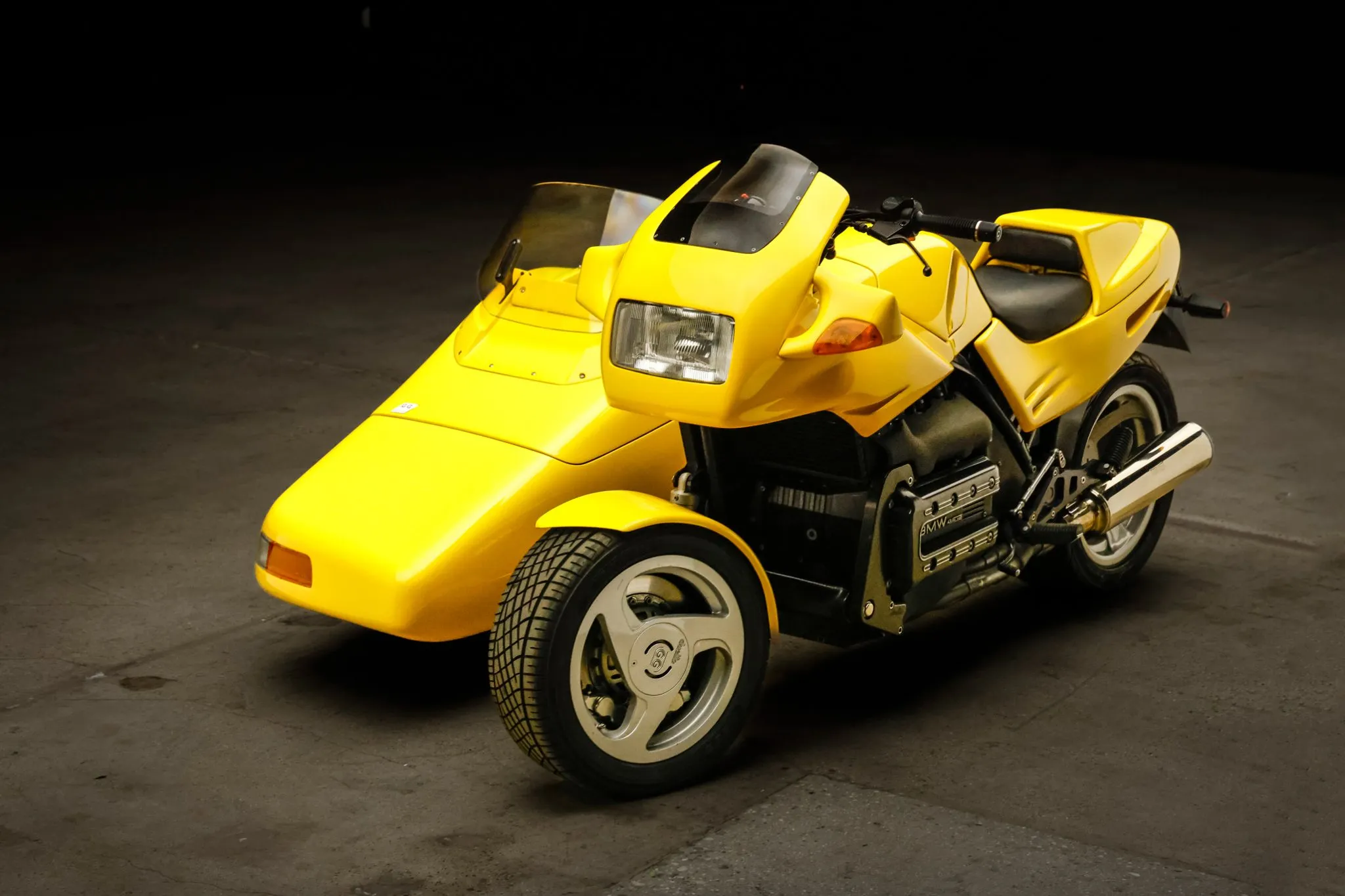
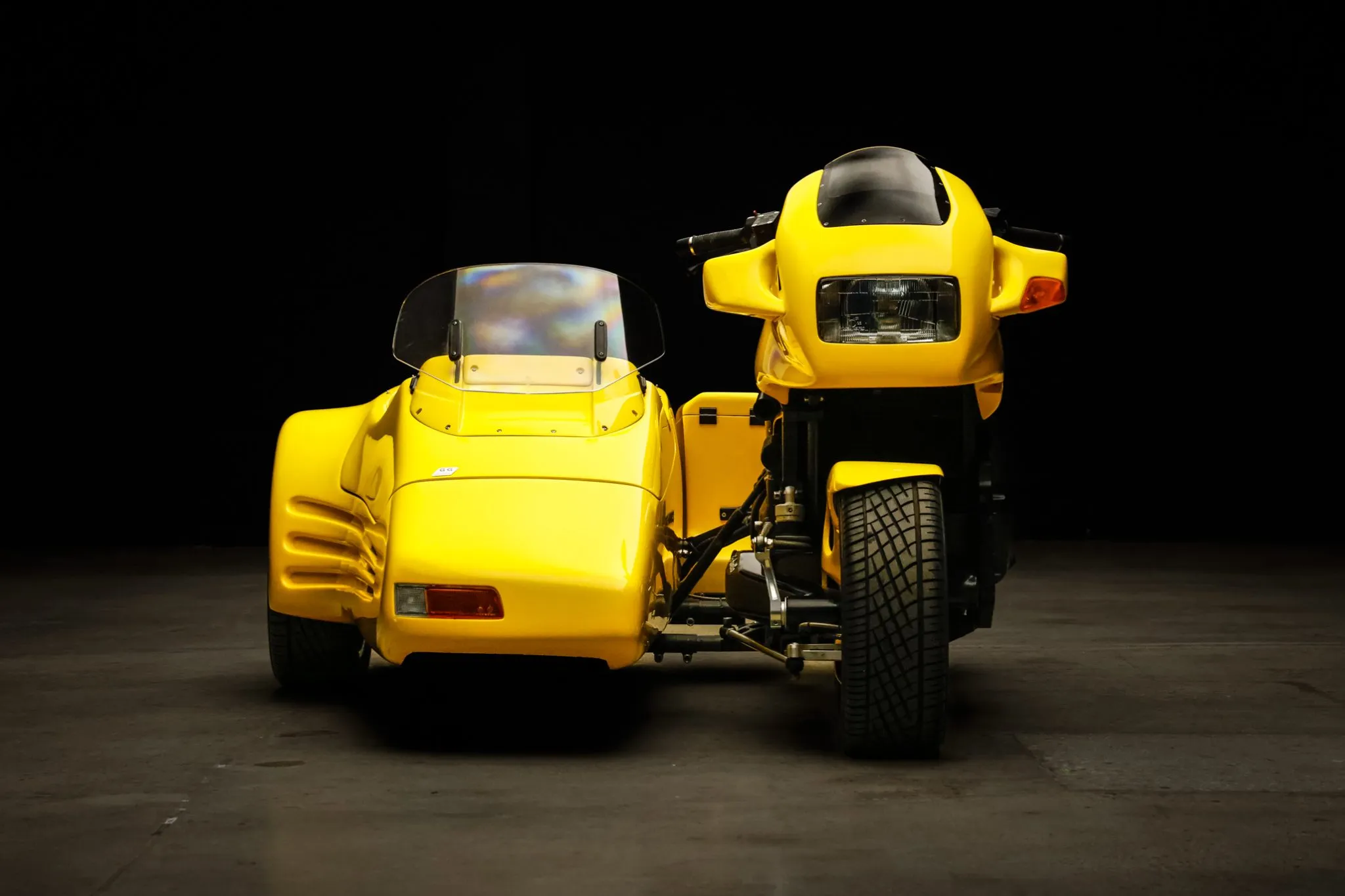
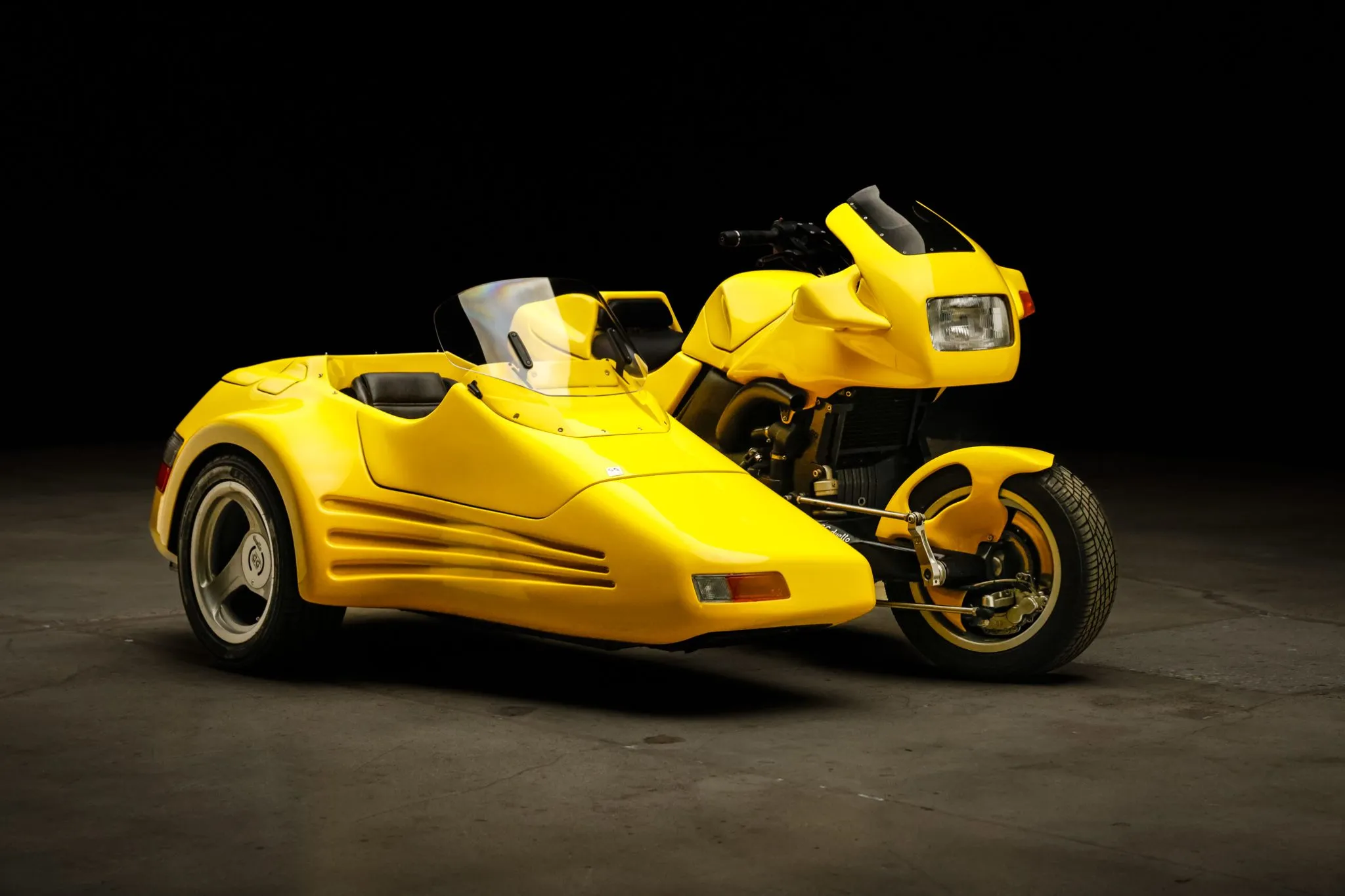
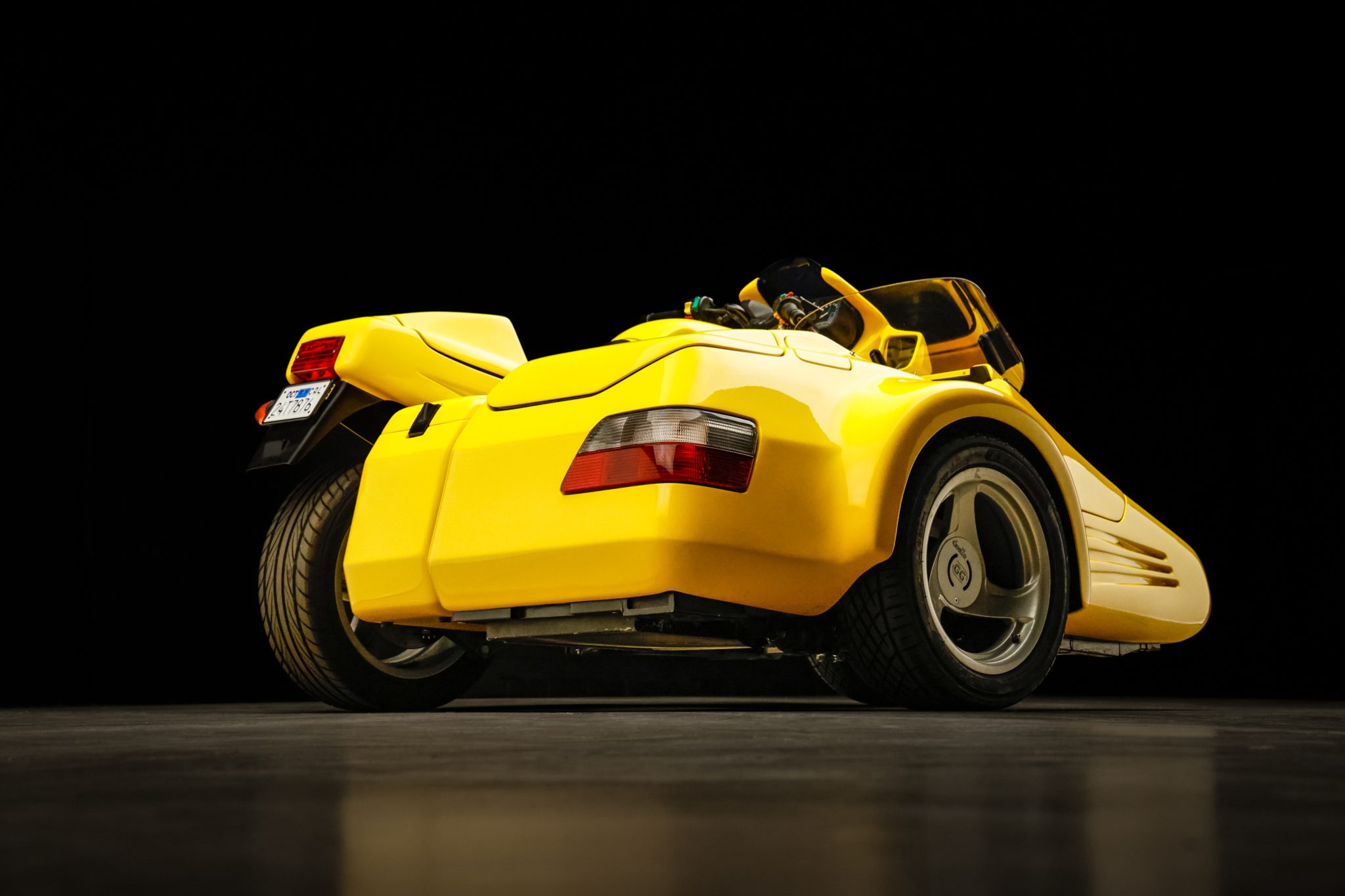
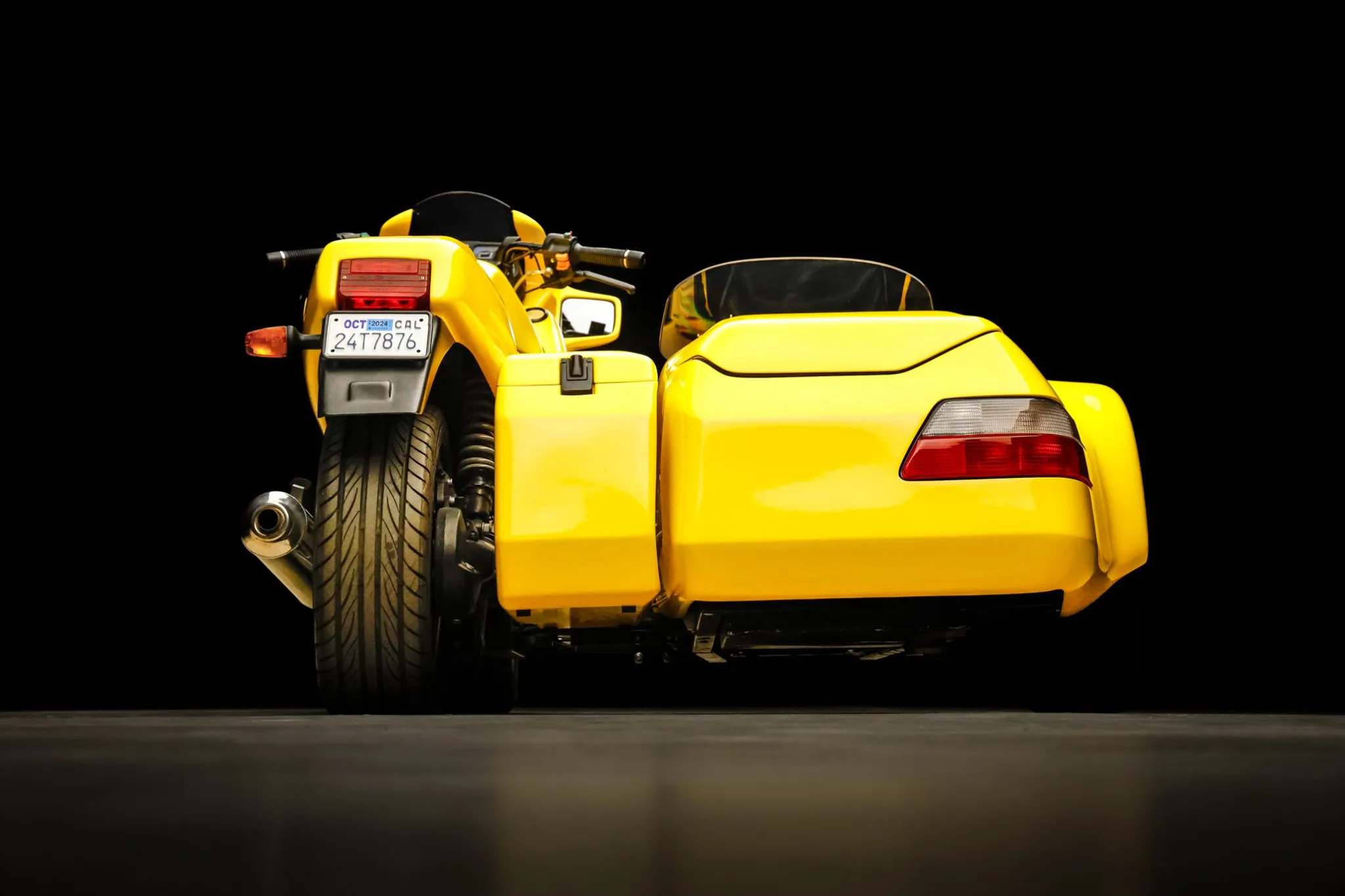
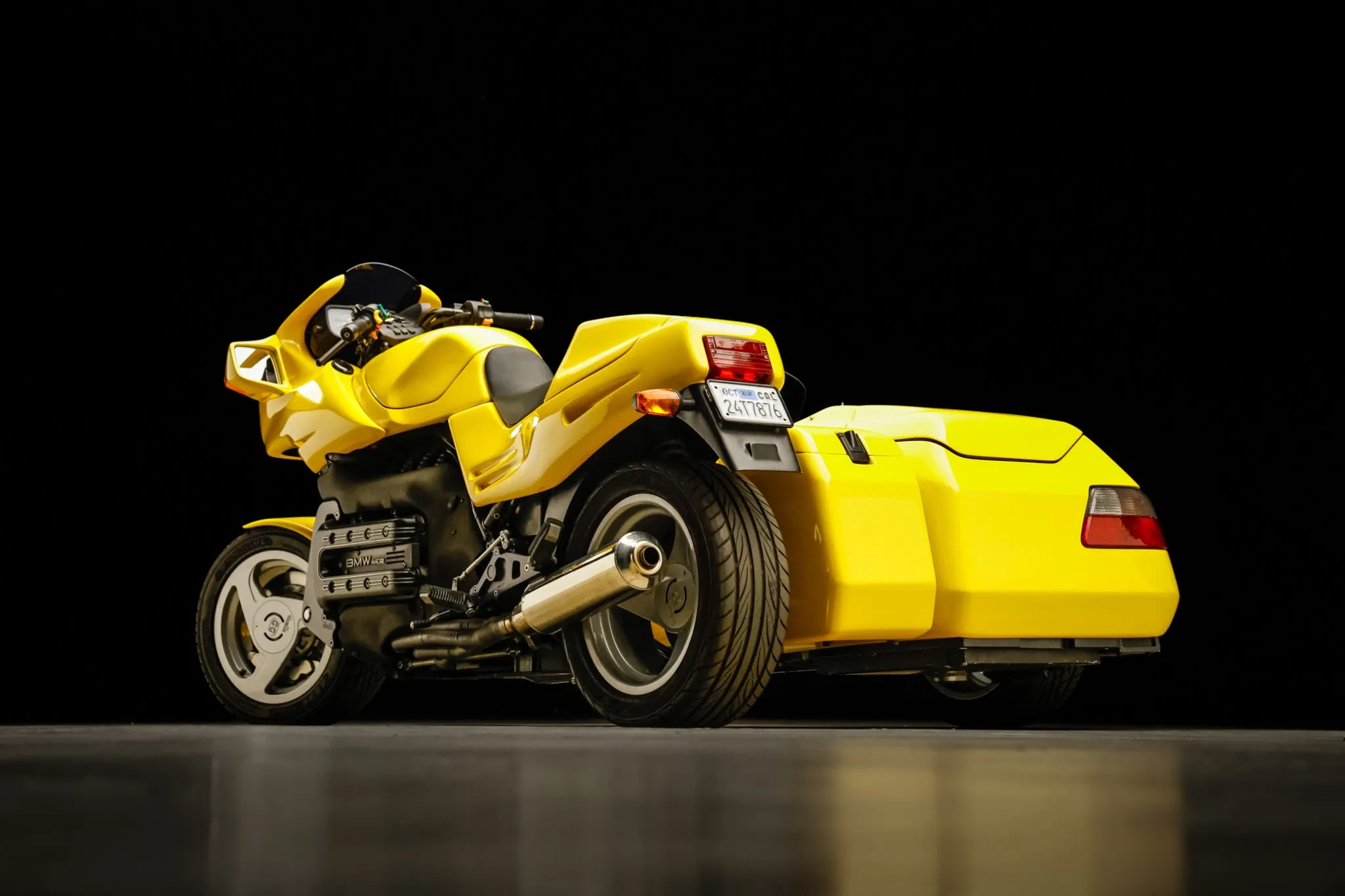
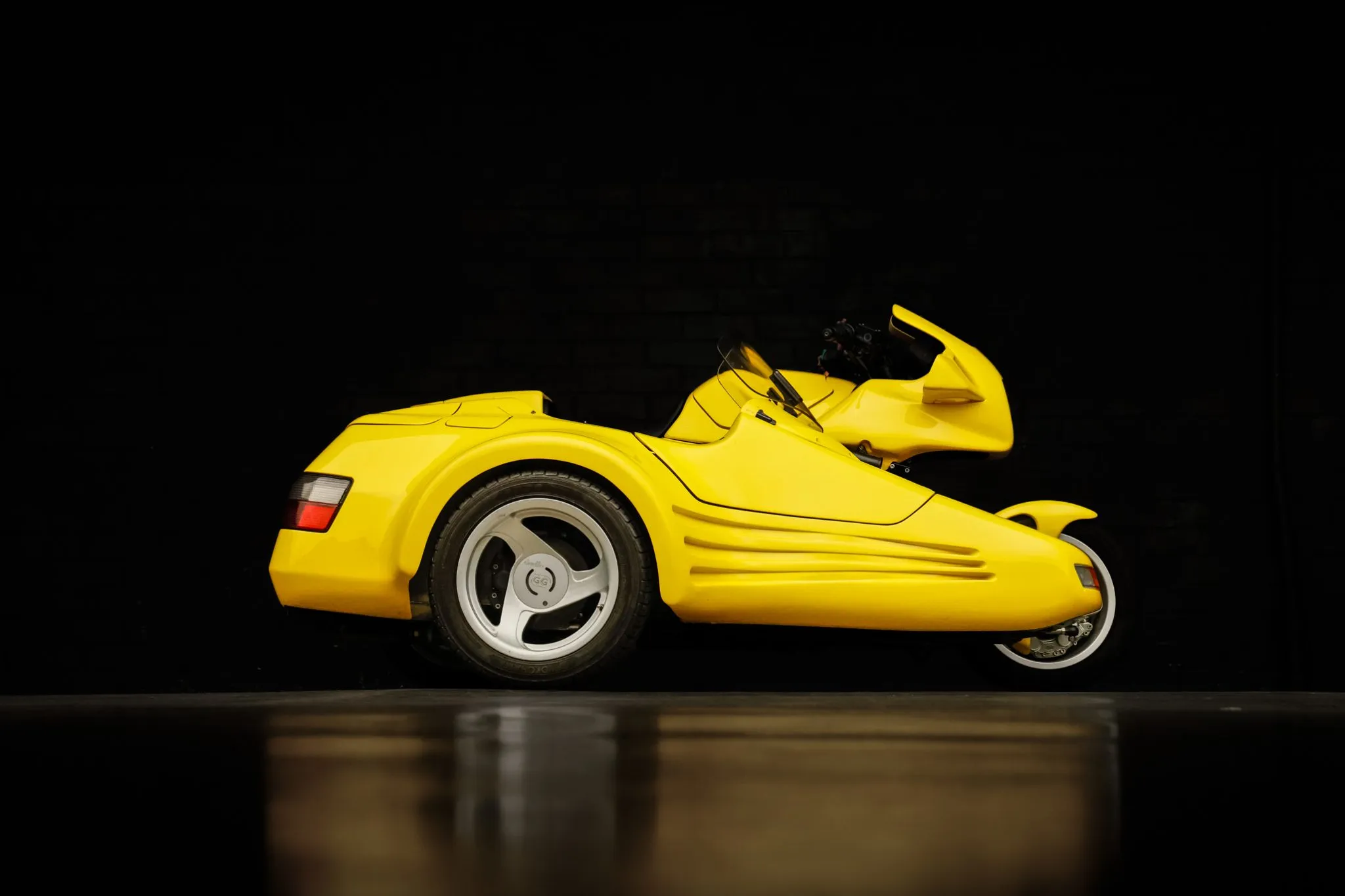
This 1999 GG Duetto is of a design by Grüter + Gut Motorradtechnik GmbH (GG) of Ballwil, Switzerland, that emphasized handling and stability in an integrated three-wheeled vehicle and is one of approximately 30 examples built during the final year of a five-year production run. It is based on a K1100-series BMW from which the fork, wheels, and bodywork have been jettisoned and replaced by a single-sided cast aluminum front swingarm assembly with hub-centric steering, an adjustable WP shock, and an eight-piston billet brake caliper in addition to Marchesini-made 6×14″ aluminum wheels and yellow-finished GFK-laminate plastic bodywork. Power is provided by the BMW’s liquid-cooled 1,092cc DOHC inline-four mated to a modified four-speed transmission with a reverse gear, and additional equipment includes ABS disc brakes, a Paralever rear-suspension setup with an enclosed driveshaft, a two-up seat with a pillion cover, and a four-into-one exhaust system with a stainless-steel Staintune muffler. The sidecar rides on a steel tube chassis with trapezoid-type suspension, an adjustable WP shock, and a Brembo disc brake, and it features a black BMW bucket seat, electrically operated hinged-hood access, a power-adjustable windscreen, and a trunk. This GG Duetto is now offered on dealer consignment with sales, service and import records, Duetto marketing brochures, a BMW service booklet, an original-owner photo, copies of relevant magazine articles, and a clean California title in the owner’s name.
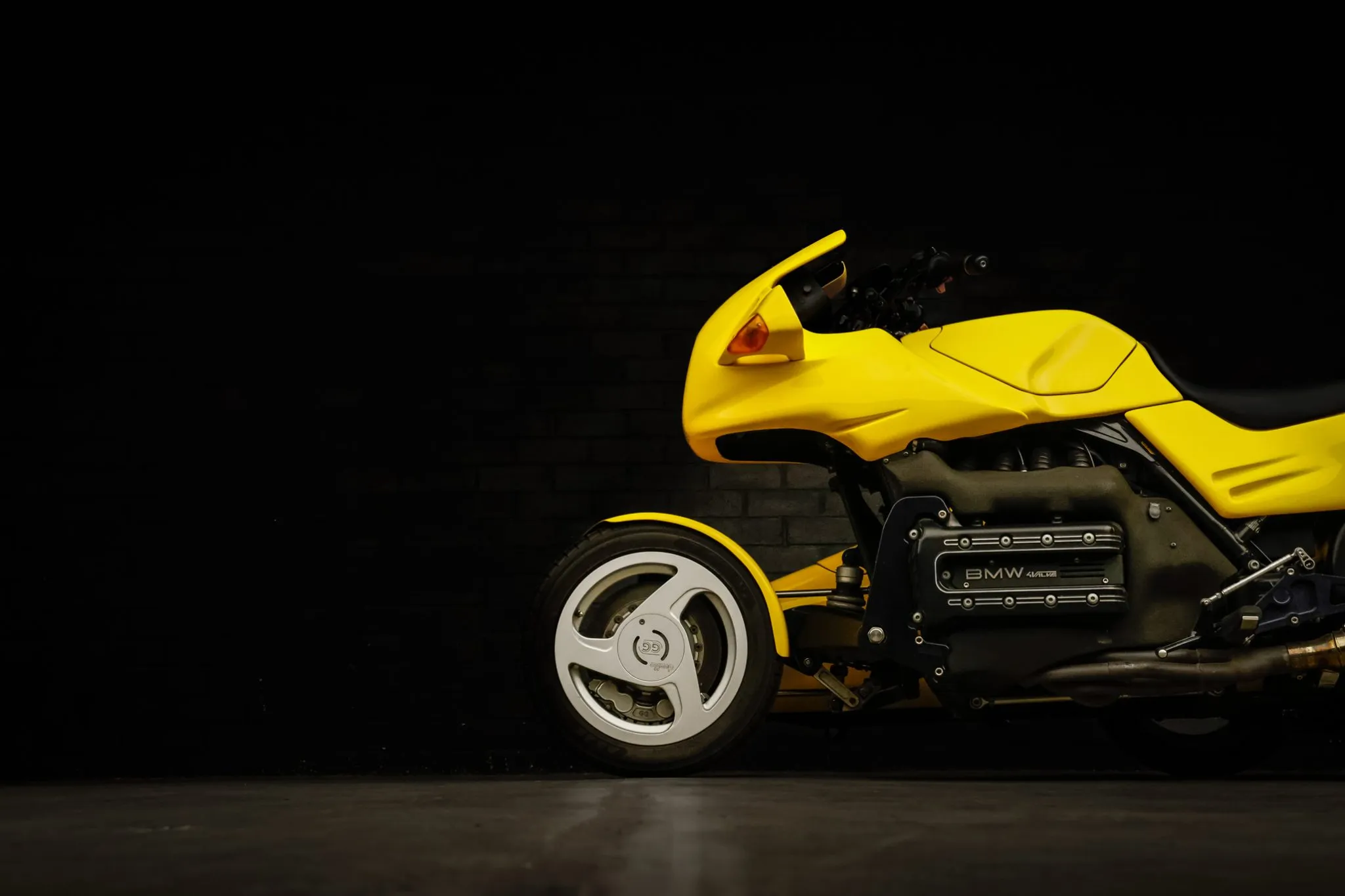
The GFK-laminate plastic bodywork is finished in yellow and secured to the rig utilizing hidden hardware. Features include a molded-in half-fairing with a rectangular headlight, a tinted windscreen, and mirrors, the left of which contains the front turn signal for that side.
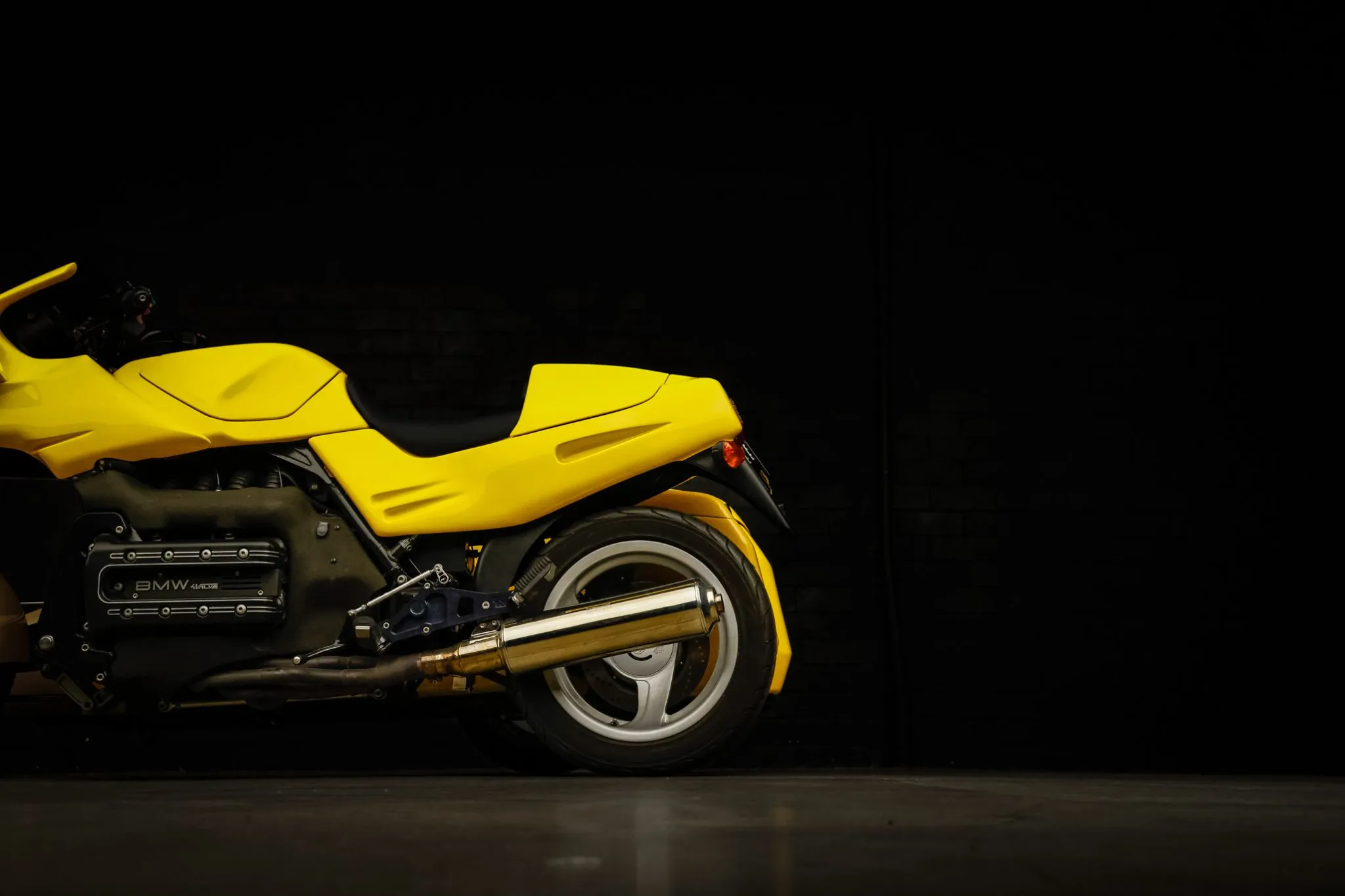
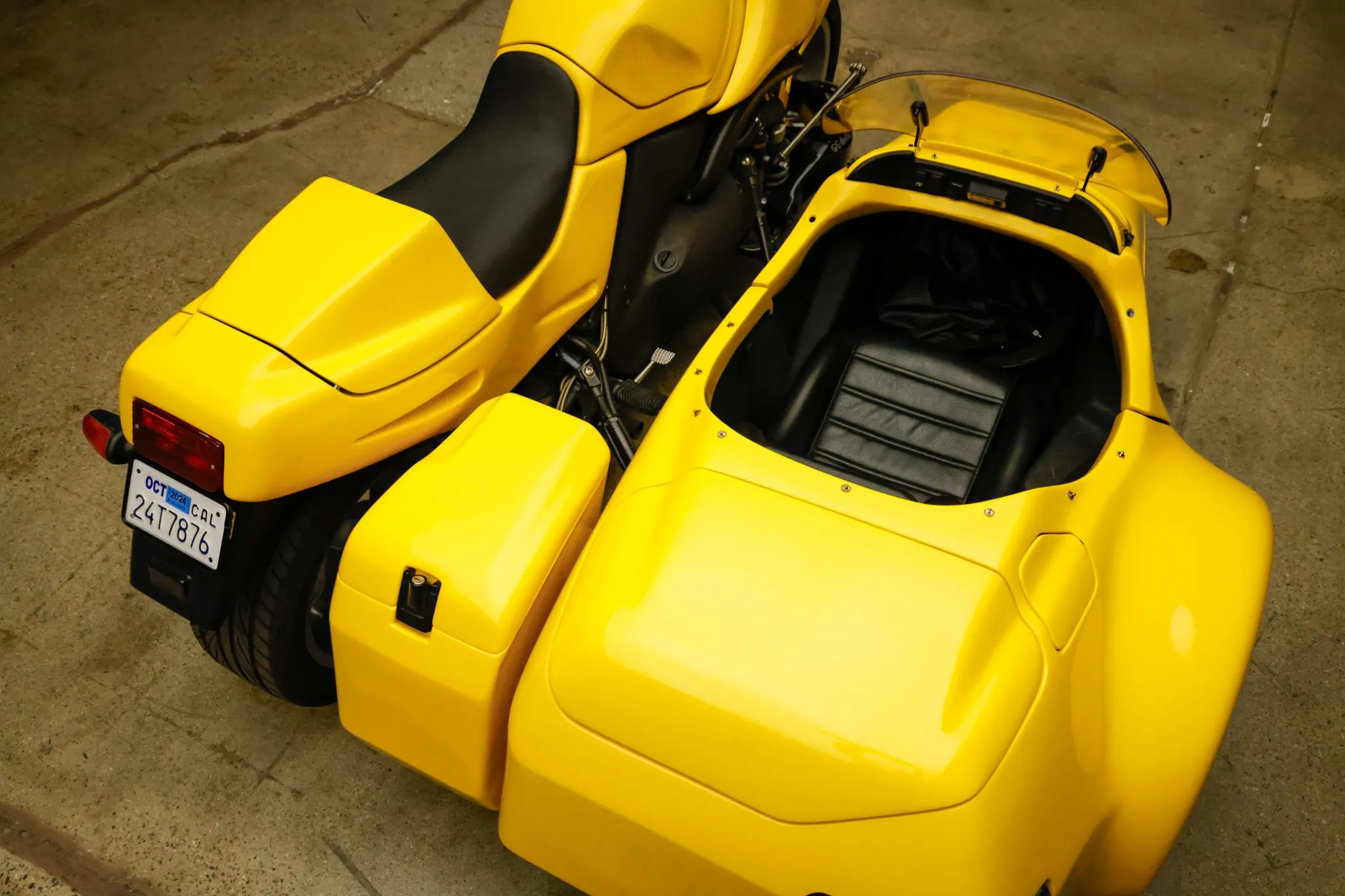
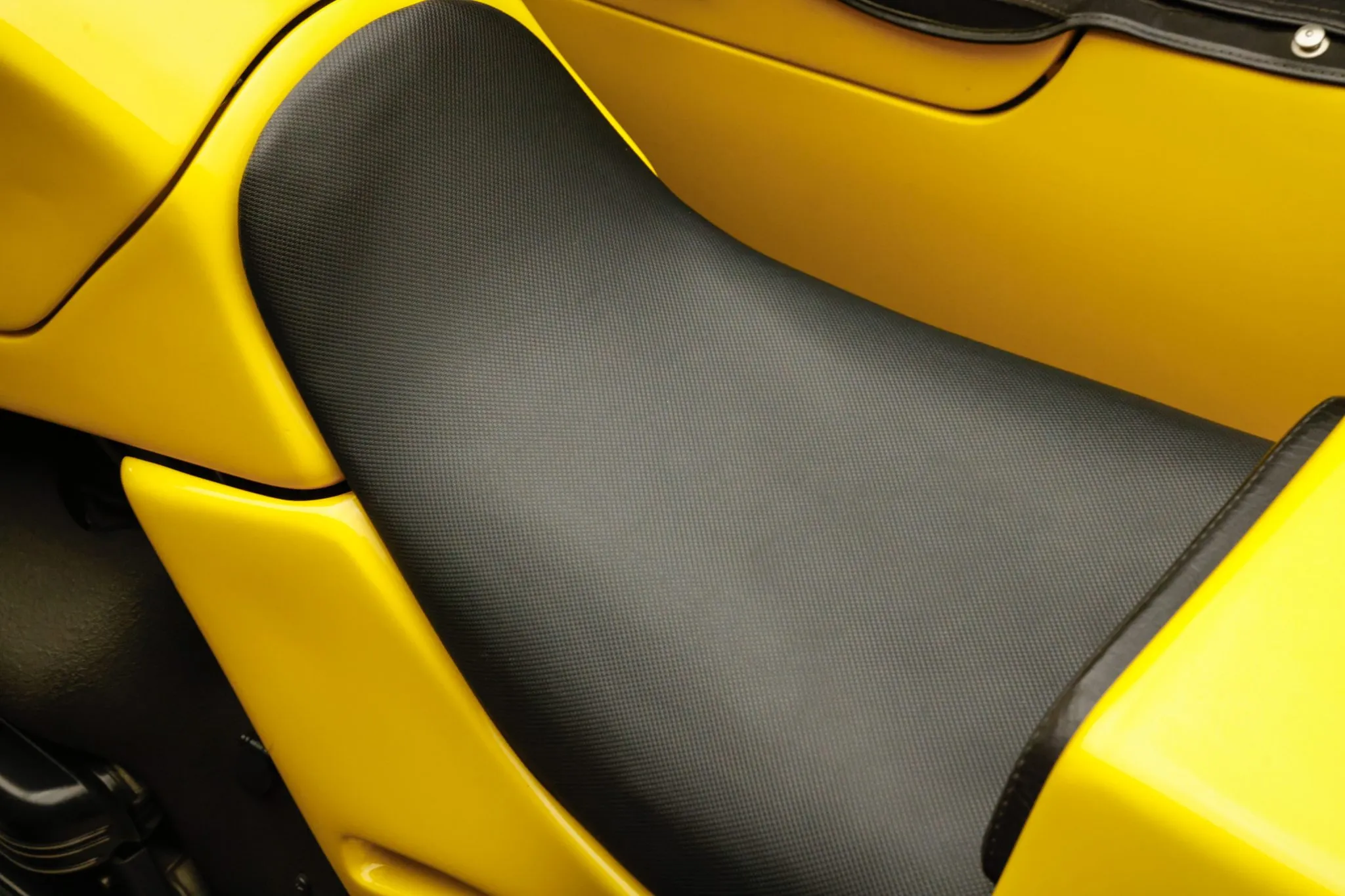
A storage box is sandwiched between the bike and sidecar, and additional equipment on the bike includes a faux fuel tank with a locking storage compartment and a two-up seat with a pillion cover as well as folding passenger foot pegs.
The bike’s front end features hub-centered steering accomplished by way of a single-sided cast aluminum swingarm that, along with the the brake stay arm and the steering and suspension linkages, attaches to a pair of machined aluminum side plates bolted to the front of the engine case. Front suspension is handled by an adjustable remote-reservoir WP shock while the K1100’s Paralever single-sided swingarm setup is employed at the rear.
Three-spoke forged aluminum wheels with Duetto center caps are manufactured to GG specifications by Marchesini and mounted with 185/50-14″ front and 195/50-15″ rear Yokohama A539 tires showing 2016 production date codes. Electronic ABS braking is provided by a custom eight-piston billet aluminum caliper over a ventilated disc up front while identical two-piston Brembo setups are employed at the rear and on the sidecar, both of which are activated simultaneously by the foot brake pedal.
The chair’s matching GFK-laminate bodywork rides on a square-section steel tube chassis outfitted with a 14″ wheel, trapezoid-type suspension, and an adjustable WP shock. The chassis attaches to the bike’s frame at four fixed points, the upper two of which employ tie-rods, and the body tilts forward on hydraulic props for ease of access to the battery, suspension, and brake. Exterior details include side strakes, front and rear turn signals, and a spring-loaded fuel filler door. The 10-gallon aluminum tank is equipped with an electric pump and positioned inboard of the wheel alongside the battery where the combined weight of the two assist in keeping the wheel on the ground.
The sidecar interior features a black vinyl BMW bucket seat with color-coordinated molded side panels and carpeting. Step-through entry is eased by way of a electrically powered hinged hood equipped with the height-adjustable electric windshield from a K1100. In addition to controls for the windshield, interior equipment includes an auxiliary power outlet and a cable pull that opens the rear trunk. A tonneau cover is included.
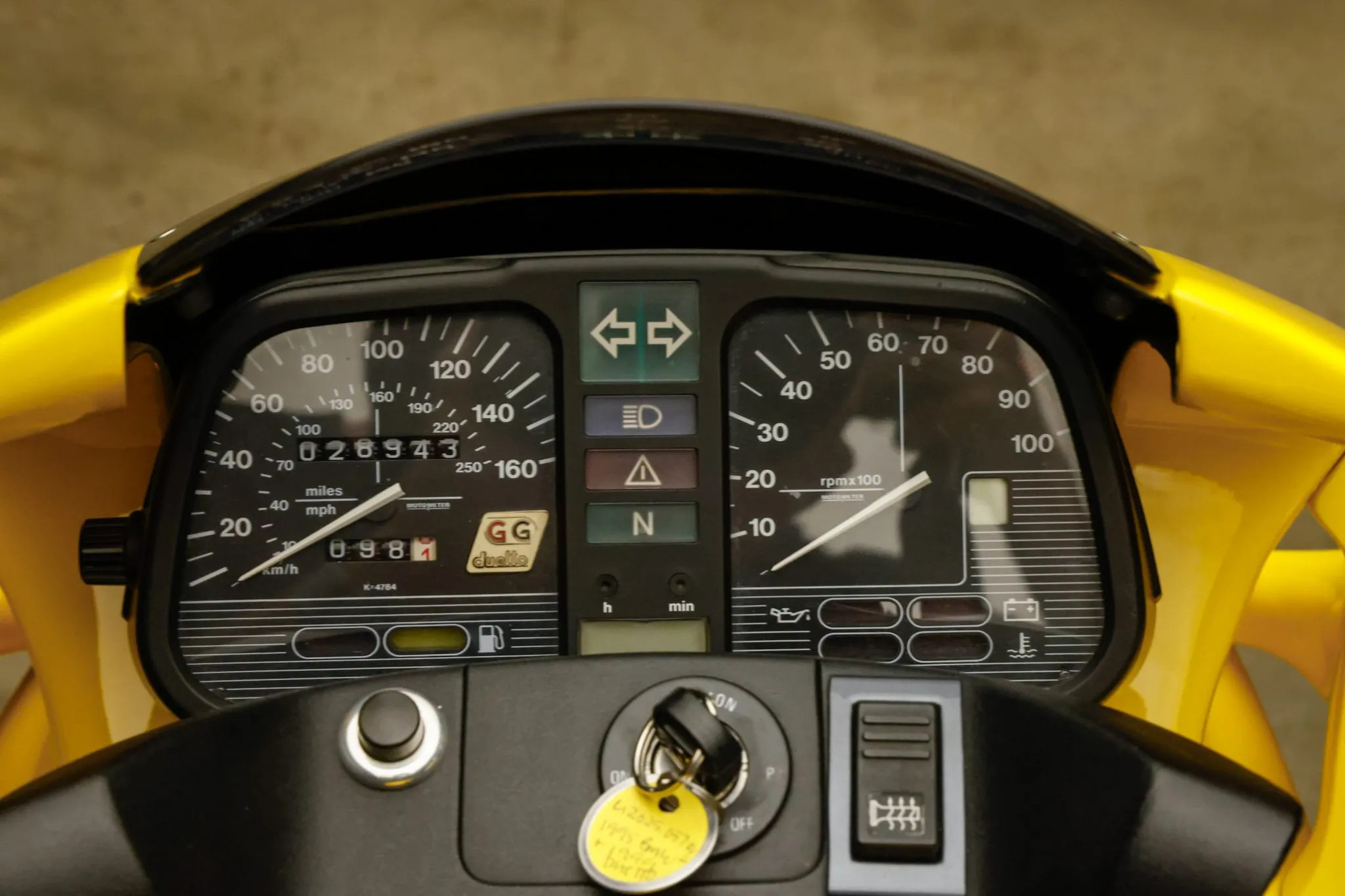
The black-finished handlebar is secured beneath a plastic shroud housing the keyed ignition switch and starter button as well as switches for the emergency flashers and heated hand grips. It fronts a MotoMeter 160-mph speedometer and a matching tachometer with an 8,500-rpm redline as well as a digital clock and a vertical bank of warning lamps while gauges for fuel level and coolant temperature are embedded in either side of the fairing. The five-digit odometer shows 29k miles.
The liquid-cooled BMW 1,092cc DOHC inline-four wears a black finish and was factory rated at 100 horsepower. It is equipped with four chain-driven valves per cylinder, electronic fuel injection, Bosch Motronic 2.1 engine management, and a four-into-one exhaust header fitted with a polished stainless-steel Staintune muffler.
Power is sent to the cycle’s rear wheel by way of a four-speed transmission with a reverse gear as well as an enclosed Paralever driveshaft.
The cycle is accompanied by English- and German-language marketing brochures, a BMW service booklet, a French-language magazine article, and copies of Cycle World magazine in which articles about the Duetto appeared. A photo of the original owner at the GG factory is complemented by her first-person account of acquiring the cycle which appeared in the pages of BMW Owners News, a copy of which is also included.