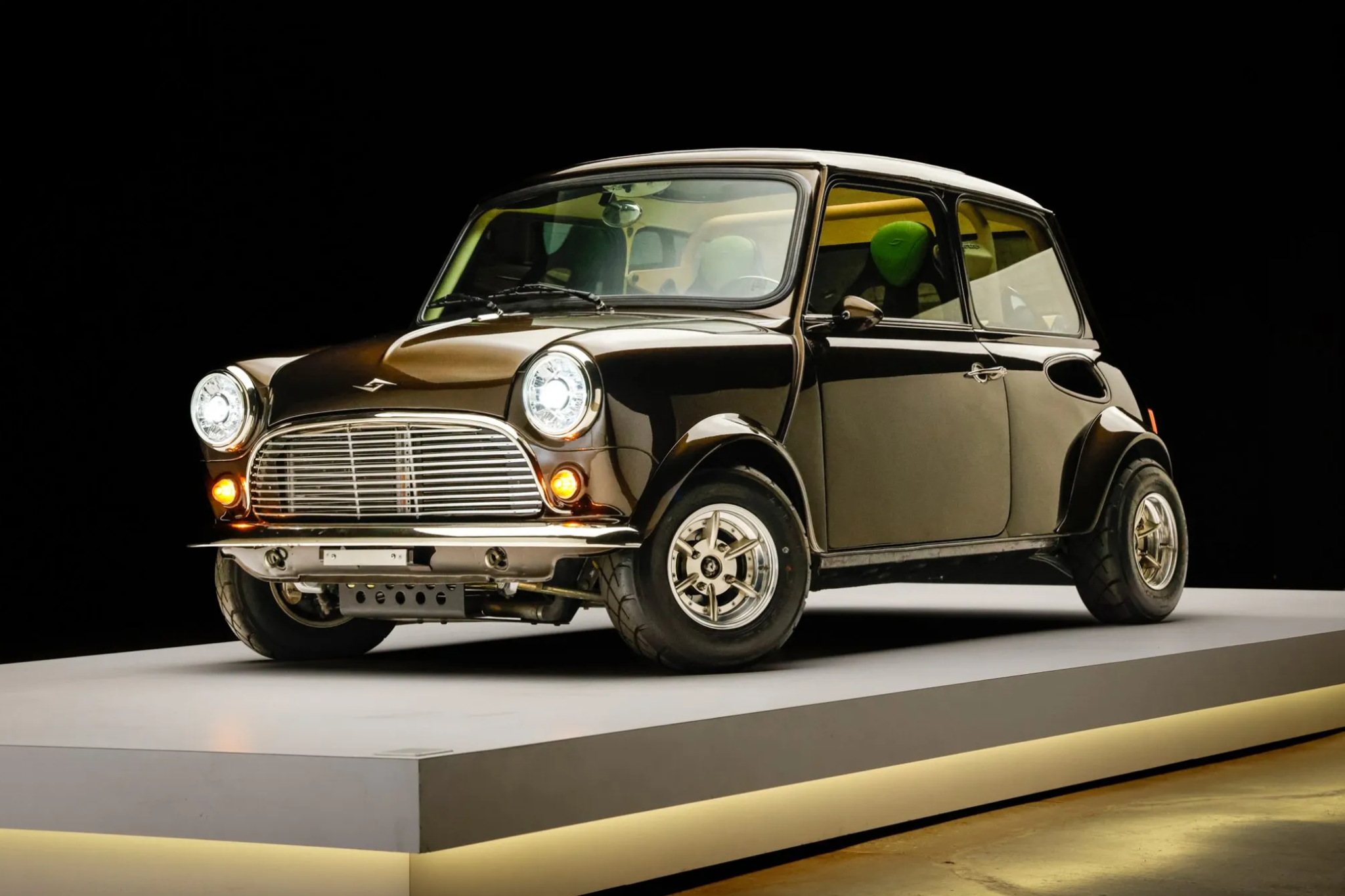
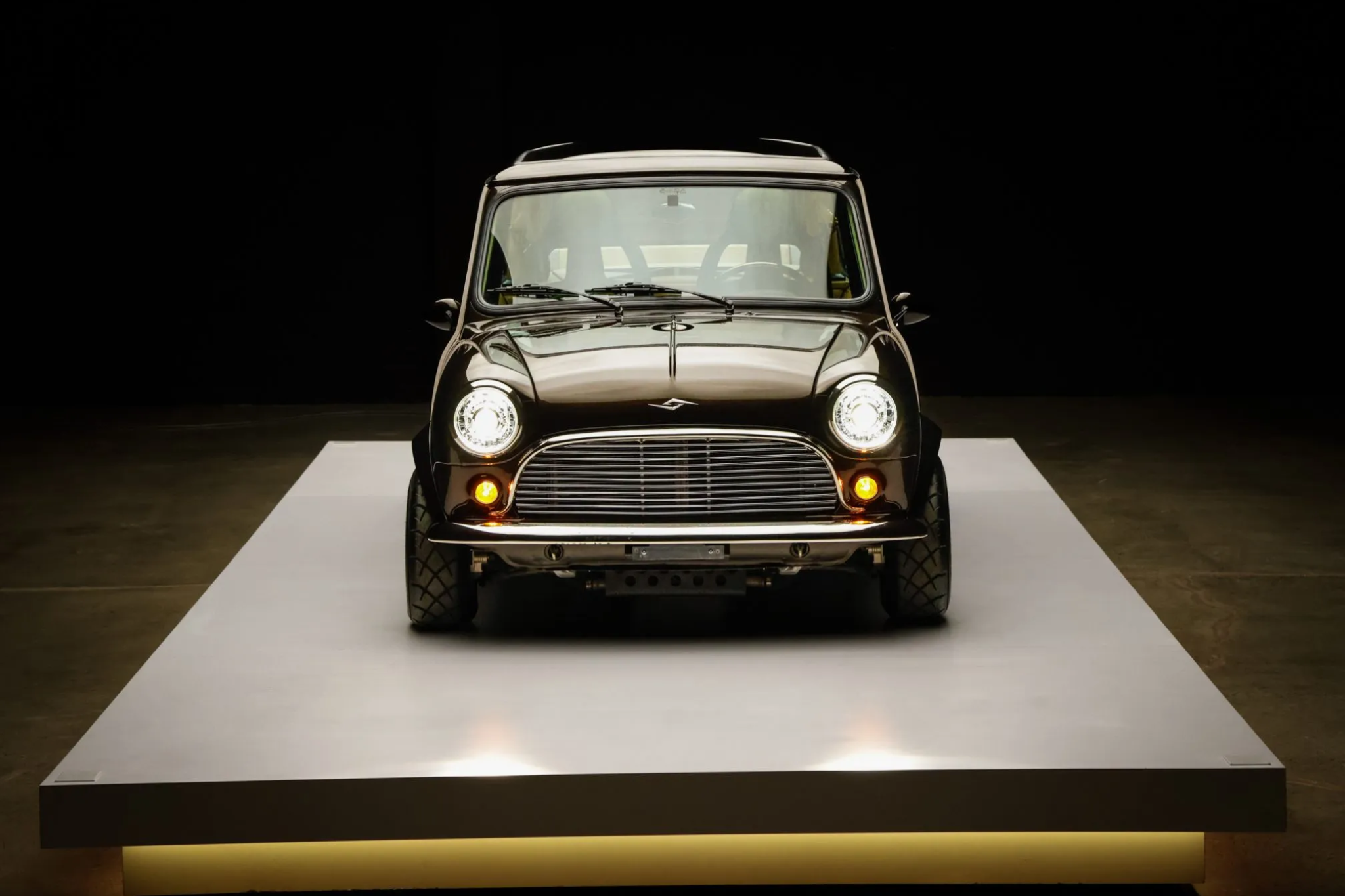
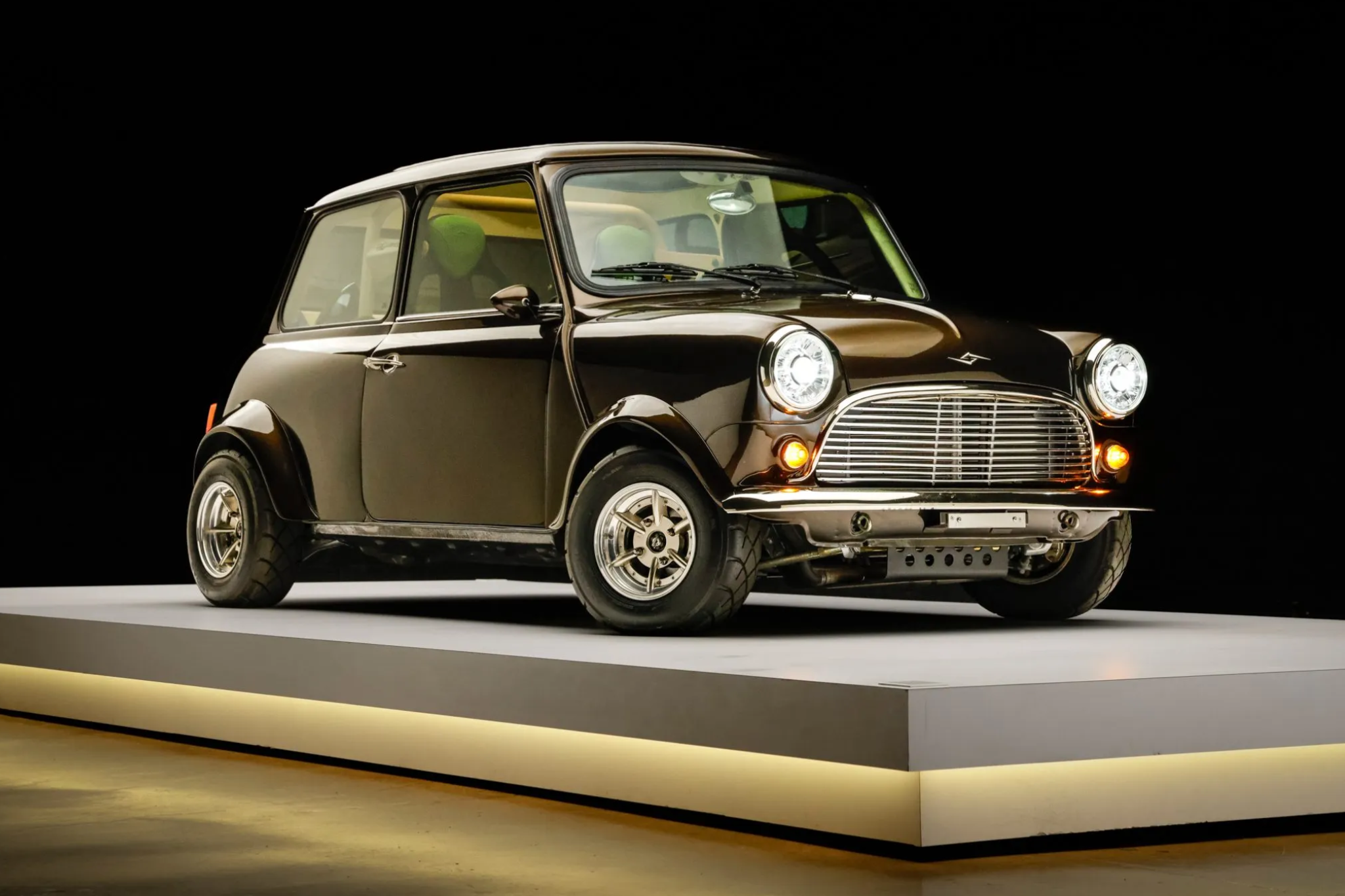
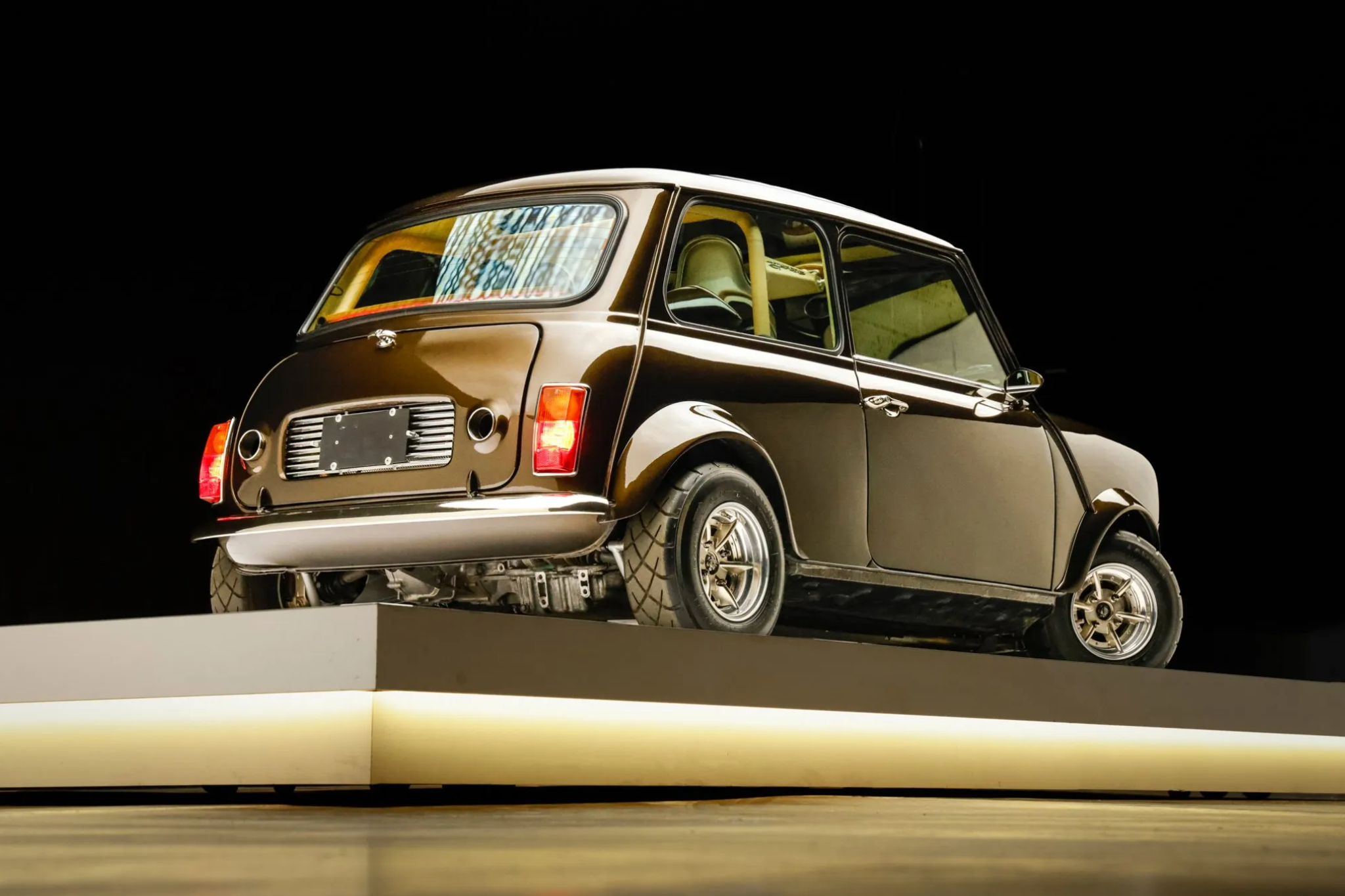
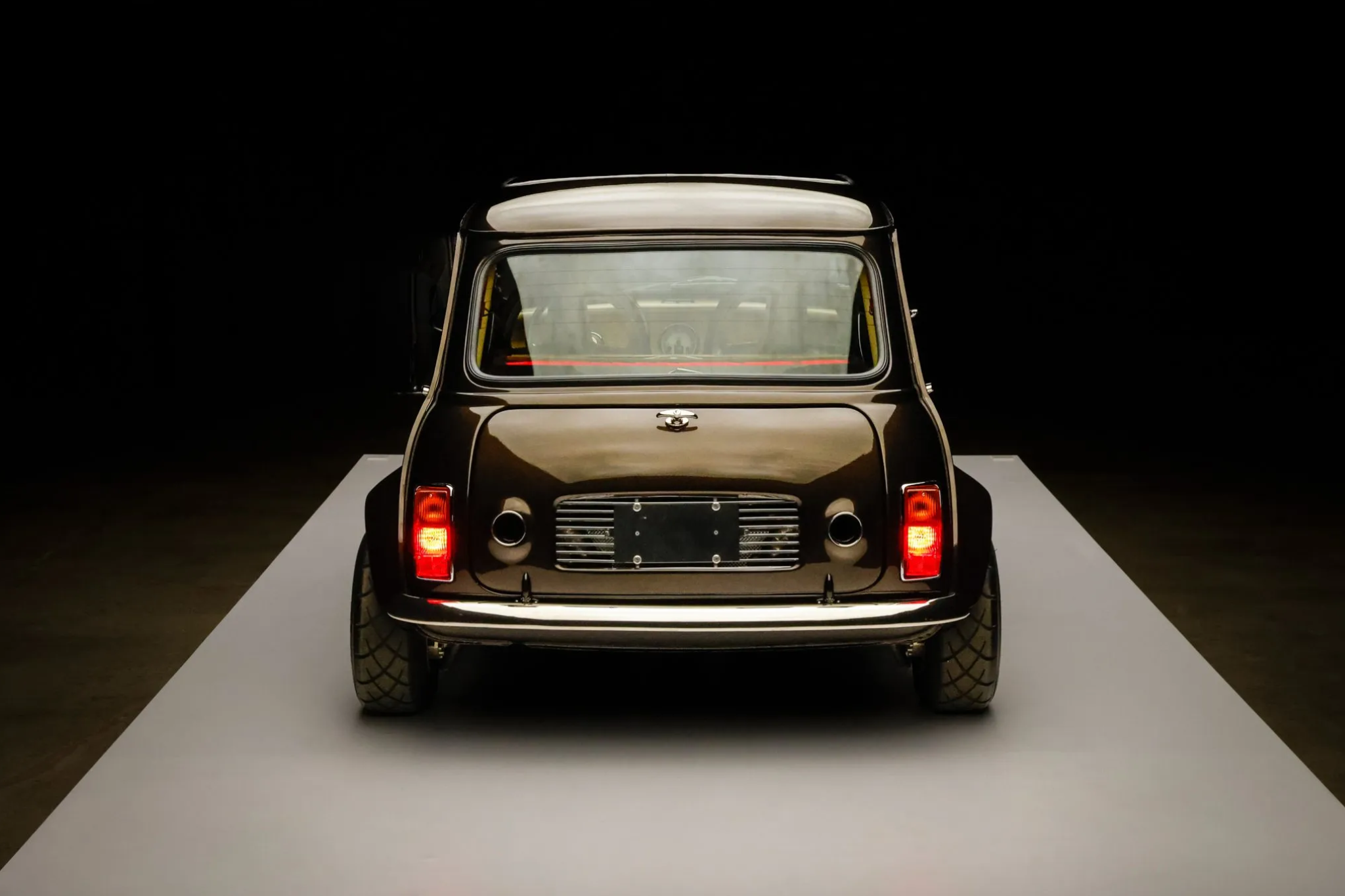
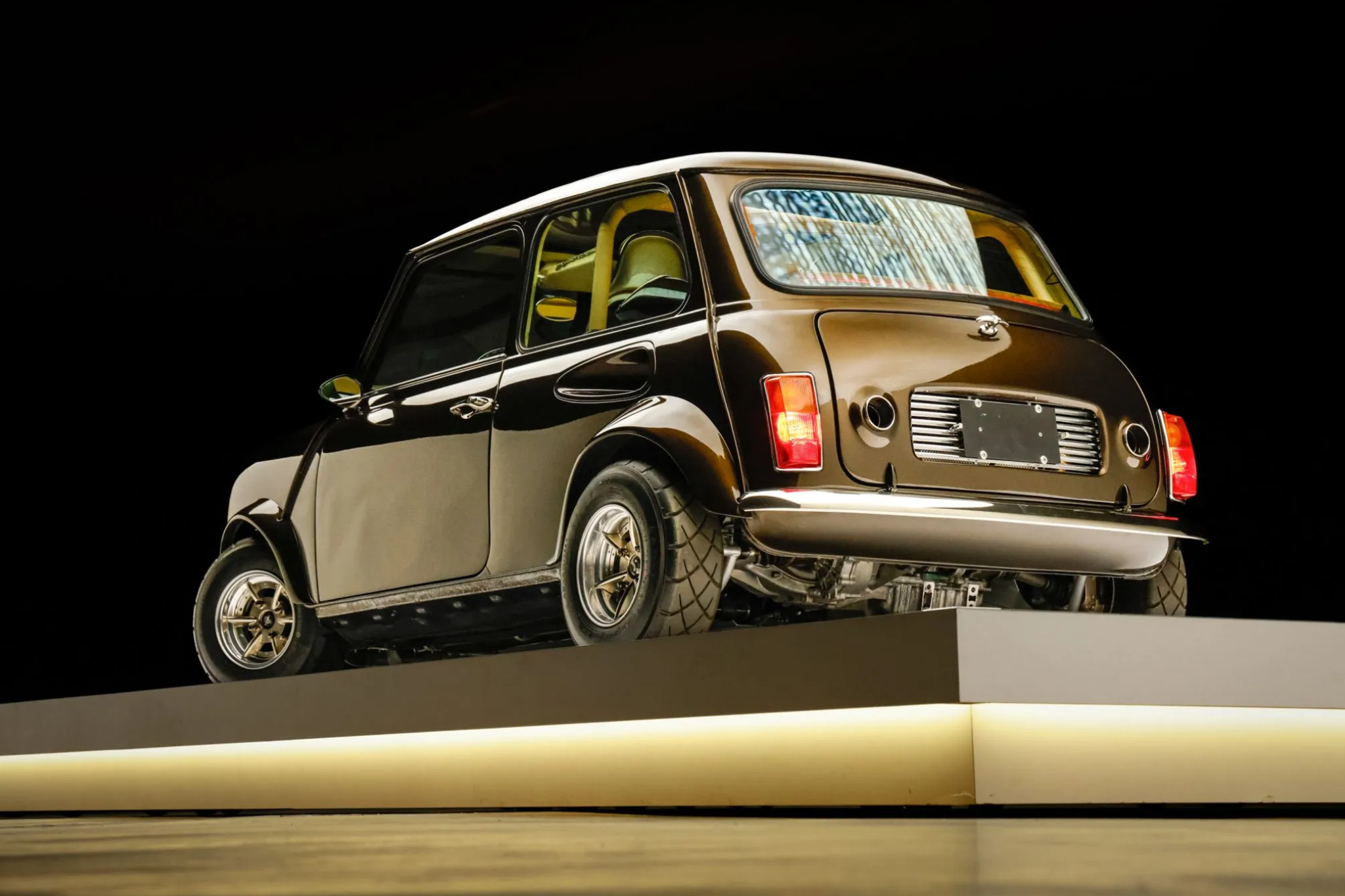
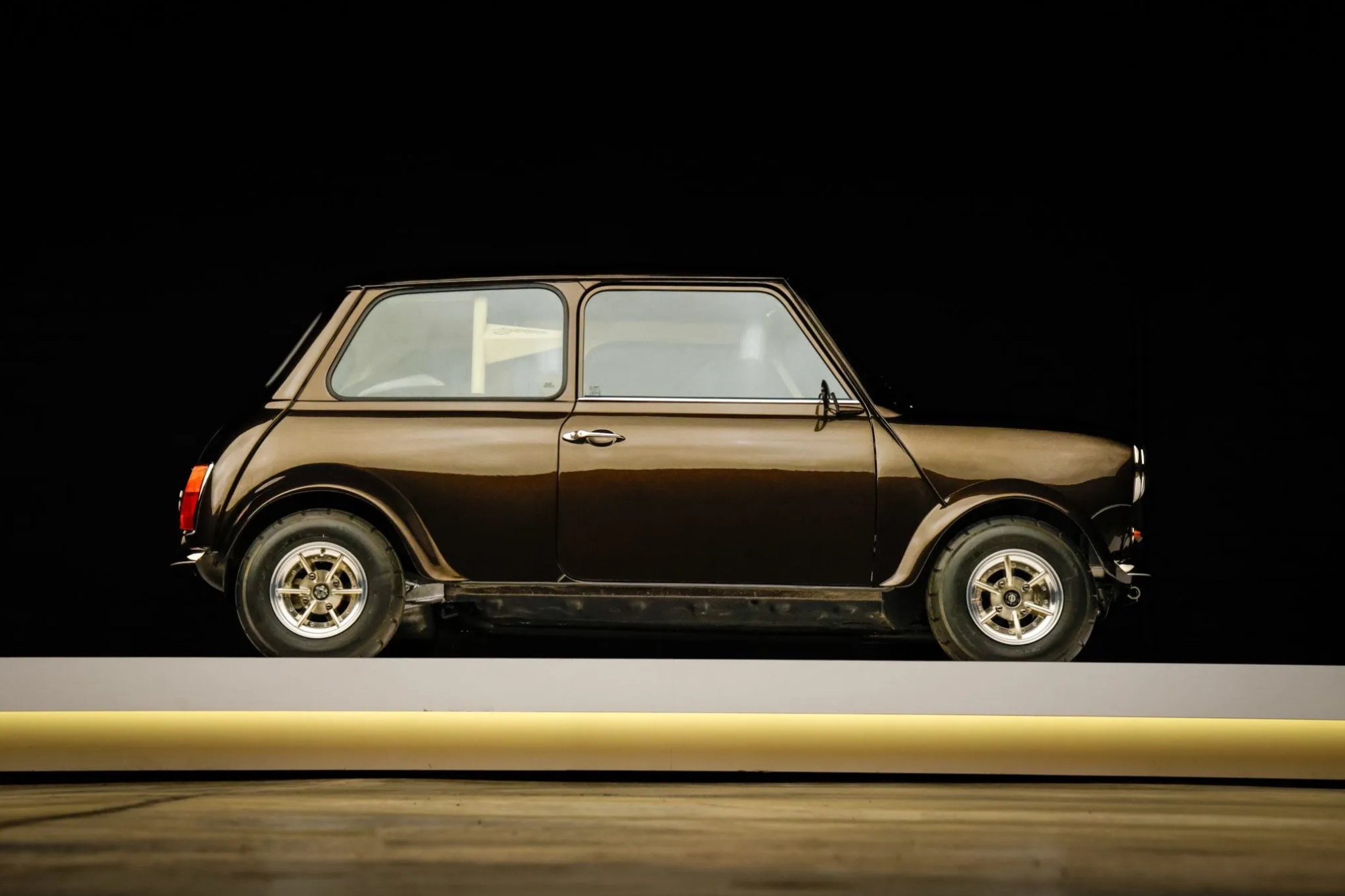
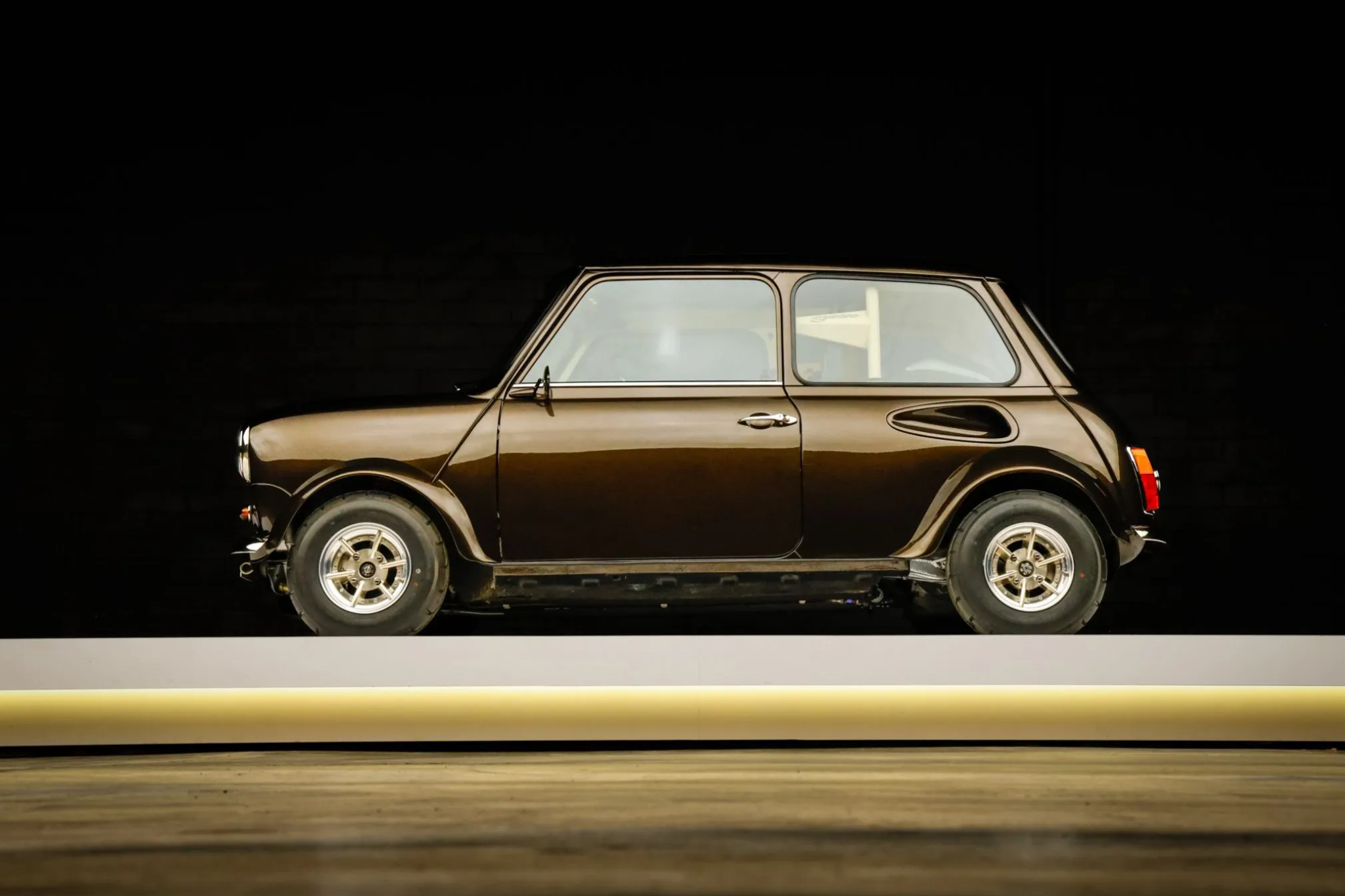
This 1993 Rover Mini was imported to Canada following initial sale in Japan and was subsequently modified by Stellera Vehicle Design of Vancouver, British Columbia, as part of a build completed in 2021. Dubbed the Type 10, the car was used as a promotional vehicle by the company and featured in articles and videos by Top Gear and Road & Track. Finished in a dark brown metallic, the hatchback features a glass roof panel, a driver-side air intake, and a carbon-fiber hood and trunk lid, while the leather-lined interior is outfitted with white ash wood trim as well as Tillet carbon-fiber bucket seats, Dakota Digital instrumentation, a Morel HiFi stereo, and Restomod Air climate control. Power is supplied a mid-mounted 2.0L Honda K20 inline-four that sends power to the rear wheels through a six-speed manual transaxle and a limited-slip differential. Additional modifications include bespoke 10″ three-piece wheels, four-pot disc brakes, double-adjustable coilovers, custom tubular rear trailing arms, and a 304 stainless-steel header and exhaust system.
The body was stripped to bare metal and fitted with wheel-arch extensions along with an air intake in the driver-side quarter panel prior to a repaint in its current dark brown metallic finish. A double-compound curved glass panel has been installed in the roof, and stainless-steel mirror housings are affixed to the doors. LED headlights, a Mk I-style grille, and a Mk III-style taillights are additional elements.
Custom CNC-machined 10×6″ three-piece wheels are said to incorporate directional spokes for heat extraction and brake cooling and are mounted with 165/70 Yokohama Advan-032R tires. Stopping power is provided by Minisport four-pot disc brakes with vented front discs and a Wilwood emergency-brake caliper, which is linked to a Trigger lever mounted in the cabin.
Tubular rear trailing arms were fabricated to accommodate the CV axles, disc brakes, and hubs within the 10″ wheels. The car rides on QA1 front and Protech rear double-adjustable coilovers and features an adjustable front anti-roll bar.
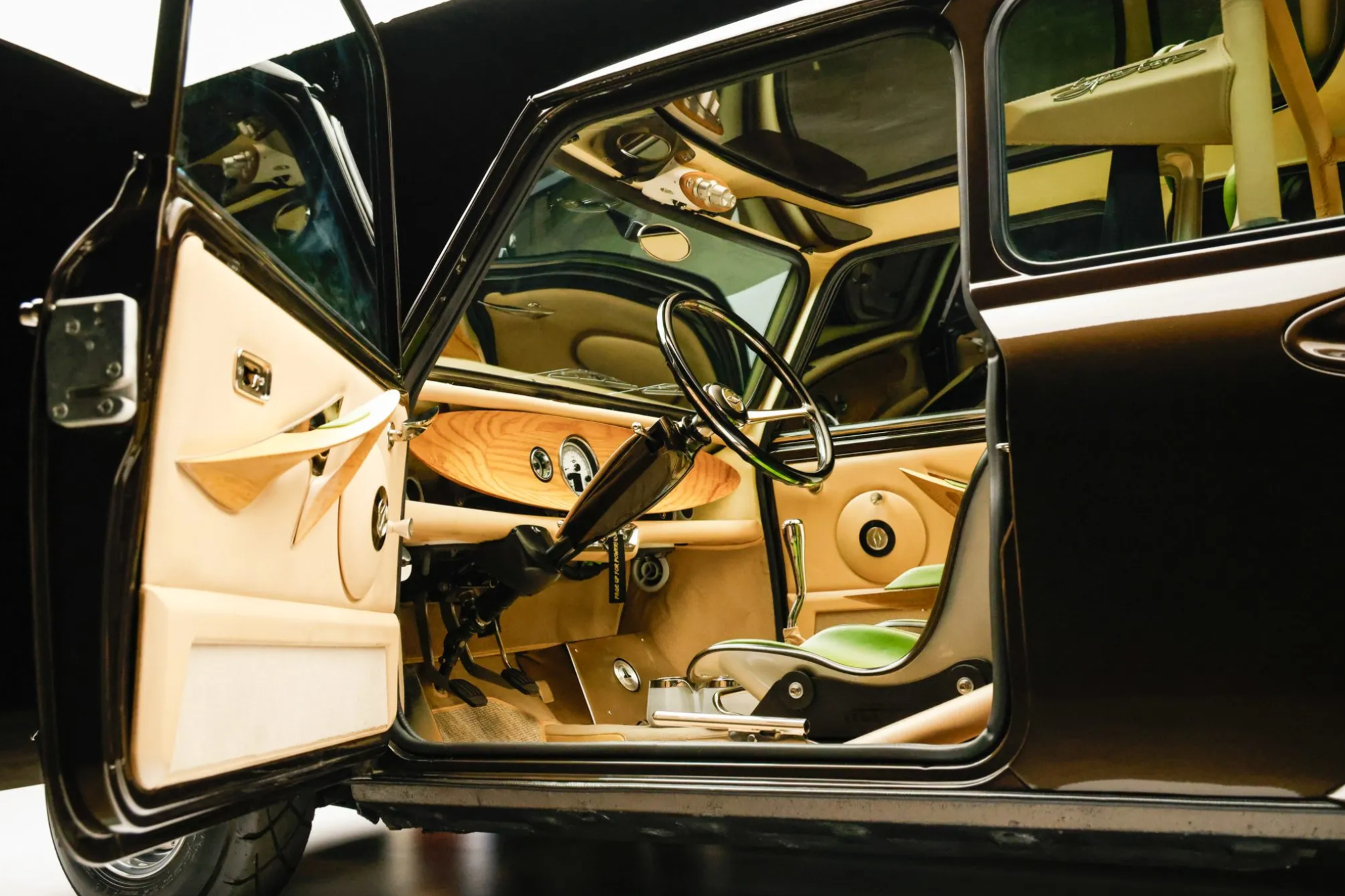
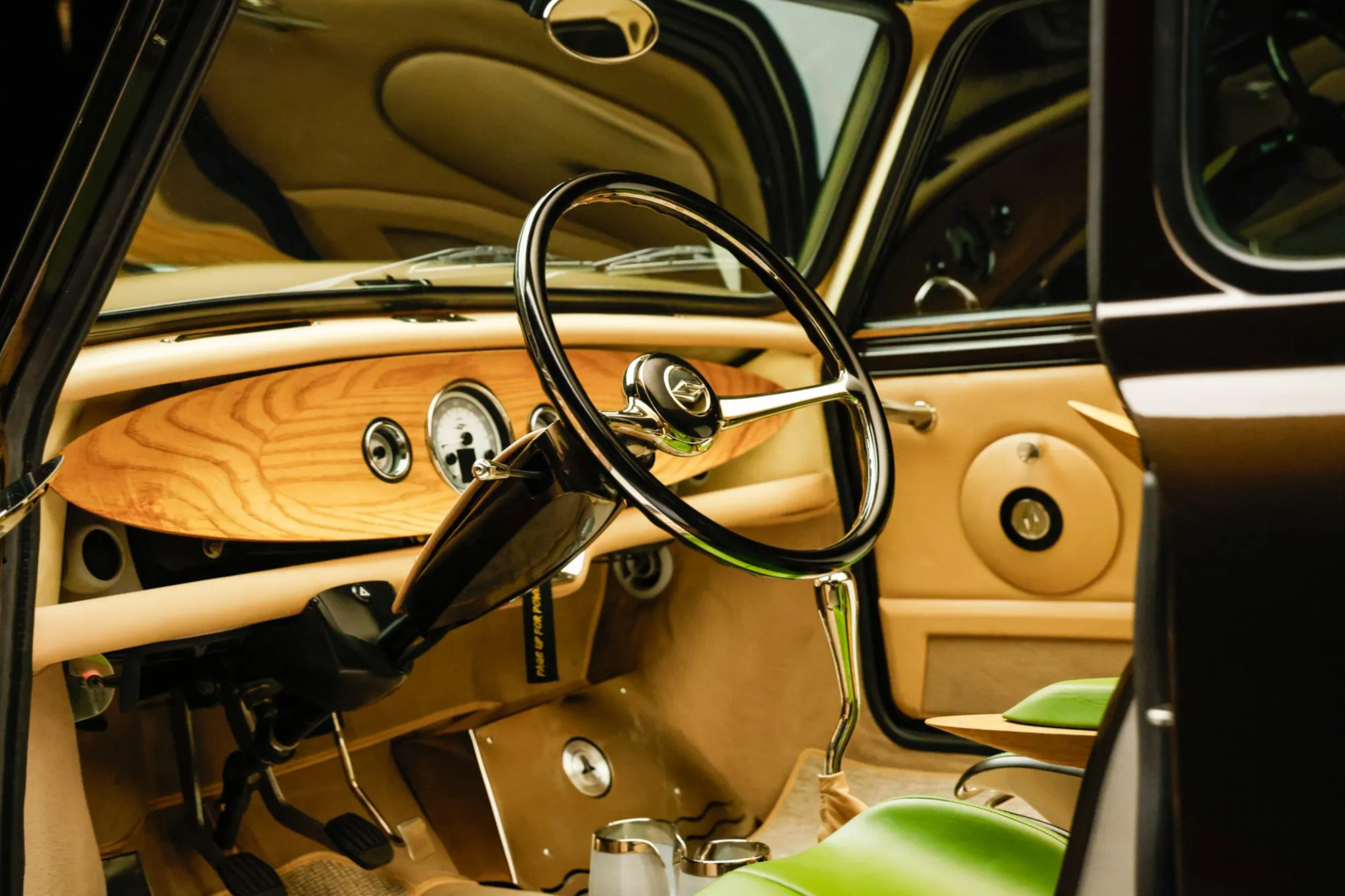
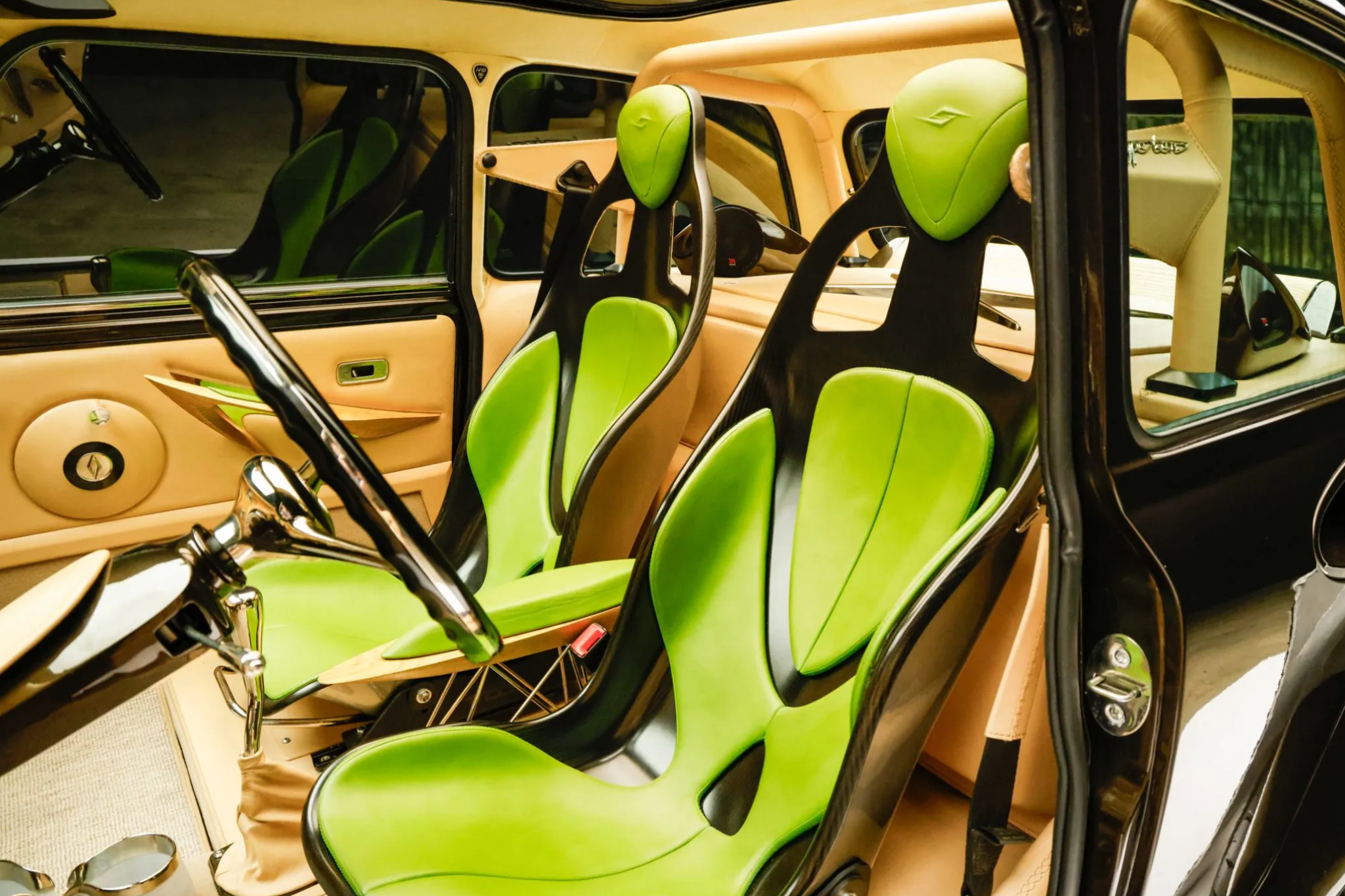
The cabin was converted to left-hand-drive and outfitted with Tillet carbon-fiber bucket seats with green leather upholstery that sit ahead of a custom engine bulkhead. Tan leather covers the dash surround, door panels, and rear compartment, while Alcantara trims the headliner. The integrated six-point roll cage is accompanied by a floor cross brace, and the floor is lined with wool square-weave carpets. Billet aluminum components include a one-piece gear shift lever, door pulls, and engine compartment access panels. The car is further equipped with a Bluetooth-capable Morel HiFi stereo, a Restomod Air climate control setup, and a push-button ignition system along with 3D printed cup holders and custom window crank handles.
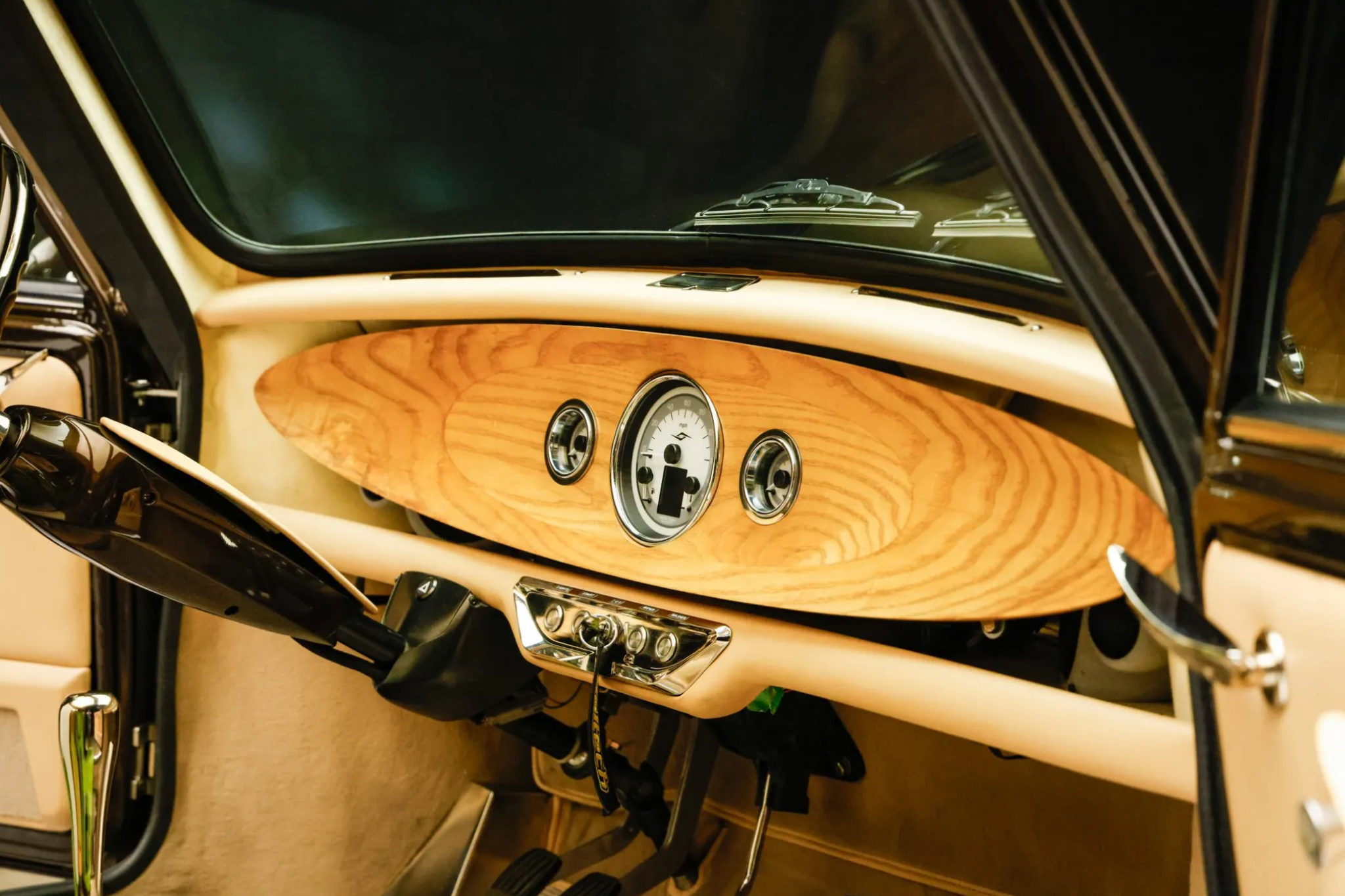
The two-spoke steering wheel is styled to mimic 1960s-era Minis and sits ahead of a milled dashboard made from Vancouver Island–sourced white ash that is also utilized for the door handles and center armrest. Centrally mounted Dakota Digital instrumentation consists of a 160-mph speedometer with inset readouts for fuel level and water temperature as well as a 9k-rpm tachometer and an oil temperature gauge. The digital odometer does not work, and the seller estimates that approximately 1k miles have been covered since completion of the build.
The carbon-fiber hood features a pass-through for a recessed fuel filler cap that mimics the panel’s center line and opens to reveal an upholstered compartment over a custom fuel cell outfitted with a 2008 Civic Si–spec fuel pump and sender unit. Additional front-mounted hardware includes an SW20 MR2 radiator, an air conditioning condenser, and fillers for the windshield washer and brake fluid reservoirs. Plaques highlighting the companies involved in the build are installed above the grille support.
The mid-mounted 2.0L Honda K20Z3 inline-four reportedly underwent a rebuild in 2020 before being installed behind the seats in a rear tub using a custom subframe cradle and is equipped with a Haltech Elite 1500 ECU and dual Motogadget mo-unit Blue digital control modules.
The custom exhaust system is comprised four-to-one equal-length header emptying into 304 stainless-steel tubing features incorporating a resonator and a catalytic converter. Gold heat shield material has been applied to the inside of the vented carbon-fiber trunk lid, which features cutouts for dual exhaust outlets.
Power is sent to the rear wheels through a Honda six-speed manual transaxle with a limited-slip differential.
The Carfax report is free of accidents or other reported damage from an initial entry in October 2009.